
High thermal conductivity: polycrystalline diamond heat spreaders can reach 1000–2200 W/(m·K) (graded by product class; final values per measured results)—significantly better than conventional metal-matrix heat-spreading materials.
POLYCRYSTALLINE CVD DIAMOND HEAT SPREADER
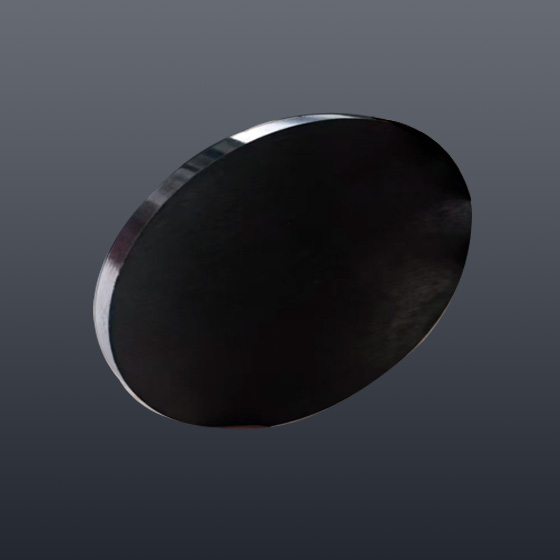
Polycrystalline diamond heat spreader
Polycrystalline CVD Diamond Heat Spreader
For high-heat-flux electronics, emphasizing high thermal conductivity, low CTE, and insulating heat spreading—a strong candidate material for next-generation high-performance cooling solutions.
QS / PRODUCT PLATFORM
MPCVD
01 / PRODUCT OVERVIEW
Product overview
Polycrystalline diamond heat spreaders are made from CVD polycrystalline diamond: numerous diamond grains grow and coalesce into a dense bulk structure. Compared with single-crystal diamond, polycrystalline diamond is more readily scaled to large area and volume production, and is one of the most widely used diamond heat-spreading materials in industry today.
Aimed at high-heat-flux electronics, emphasizing high thermal conductivity, low CTE, and insulating heat spreading—a strong candidate for next-generation high-performance cooling solutions.
01
MPCVD growth
02 / DETAIL
Polycrystalline structure
Polycrystalline diamond is grown as a dense stack of countless fine diamond grains; grain size, orientation, and purity jointly affect thermal performance. Compared with single-crystal diamond, polycrystalline diamond contains grain boundaries, so thermal conductivity varies with grain size, purity, and process conditions. Products are therefore typically offered in thermal-performance grades rather than as a single fixed value.
Qiansheng has scalable polycrystalline diamond manufacturing capability. Standard sizes cover 3", 4", and 6–8", with thickness 0.2–2 mm, to match different application specs.
03 / MATERIAL CHARACTERISTICS
Core performance
Polycrystalline diamond heat spreader
Low CTE: low thermal expansion coefficient reduces mismatch risk versus common semiconductor/power-device materials and supports long-term reliability.
High electrical insulation: polycrystalline diamond is intrinsically insulating, enabling electrical isolation alongside high thermal conductivity—for applications needing both insulating heat spreading.
High hardness and stability: high hardness, high Young’s modulus, high strength, and excellent chemical stability for long-term use under severe conditions.
Scalable manufacturing: standard sizes cover 3", 4", and 6–8", thickness 0.2–2 mm, with good product consistency for scaled thermal-management adoption.
04 / TECHNICAL HIGHLIGHTS
Technical parameters
1,000–2,200 (banded by grade)
W/(m·K)
Thermal conductivity
About 1.0
ppm/K
Thermal expansion coefficient (about 300 K)
About 4.4
ppm/K
Thermal expansion coefficient (about 1000 K)
Available on request
g/cm³
Density
| Item | Unit | Specification | Notes |
|---|---|---|---|
| Thermal conductivity | W/(m·K) | 1,000–2,200 (banded by grade) | Typical industry range. The value varies with grade, grain, and process. The measured result controls. |
| Thermal expansion coefficient (about 300 K) | ppm/K | About 1.0 | Industry reference |
| Thermal expansion coefficient (about 1000 K) | ppm/K | About 4.4 | Industry reference |
| Density | g/cm³ | Available on request | Measured values for this product are available on request |
| Size | inch | 4, 6–8 | Company standard size |
| Thickness | mm | 0.2-2mm | Confirmed standard thickness range |
| Electrical properties | — | High electrical insulation | Industry reference for volume resistivity is on the order of 10¹⁵–10¹⁶ Ω·cm. The measured result controls. |
| Mechanical properties | — | High hardness, high Young's modulus, high strength, and good chemical stability | Specific values are available on request |
| Surface roughness / flatness | — | Precision machining for high flatness, low roughness, and low warp | Specific values are available on request |
05 / SPECIFICATIONS
Product grade/specification
Standard specs
3"
4"
6–8"
THICKNESS
0.2–2 mm
Standard specs: 3", 4", 6–8"
Standard thickness: 0.2–2 mm
Thermal-performance grading: products offered by thermal-conductivity grade; grade naming and corresponding values confirmable on request
Customizable: non-standard size, thickness, thermal-conductivity grade, surface finishing, and more on request
06 / APPLICATIONS
Application fields

High-heat-flux cooling for AI/GPU chips

SiC/GaN power-module thermal management

Cooling for RF PAs and communications devices

Thermal management for lasers and optoelectronic equipment
Polycrystalline diamond heat spreaders are used mainly to spread hotspots, lower junction temperature, and improve system stability—suited to high-power-density, highly integrated electronics cooling.
07 / QUALITY & VALIDATION
Inspection and documentation
Polycrystalline diamond products have been tested by a third-party lab (Hantang Testing). Specific test items, reports, and parameters can be requested via the "Technical inquiry" entry.